Asbestos siding removal in Vancouver, WA, priced in writing before the 10 day wait starts
Burnt Bridge Siding Removal is an asbestos cement siding removal service serving Vancouver, Clark County, and the Interstate 5 towns of Cowlitz County in Washington. We test the siding, file the Southwest Clean Air Agency notice for you, take every shingle off wet and whole, and hand you a landfill manifest and a bare wall ready for new siding.
- Work performed by Washington L&I certified asbestos abatement crews
- SWCAA notice filed and the fee included in your quote
- Every range on this site is the range we quote from
Removing asbestos cement siding from a house in Vancouver, Washington costs about $6 to $9 per square foot on a one story house and $8 to $12 per square foot on a two story house, so a typical 1,200 to 1,800 square foot ranch runs $6,500 to $12,000 with the Southwest Clean Air Agency notice fee of $384 and landfill disposal included. The material, often called transite, was sold as shingles and flat board from the late 1930s into the early 1970s, and about 38 percent of Vancouver housing predates 1980. Washington law requires a certified asbestos abatement contractor for any house that is rented, being flipped, under contract, or commercial, while an owner who lives in the house may do the work personally under a $39 notice. Every contractor removal carries a 10 day waiting period after the notice is filed, the siding has to come off wet and unbroken, and the waste travels to an approved landfill on a shipment record. Plan two to three weeks from the first call to a bare wall.
How to tell if your house has transite siding
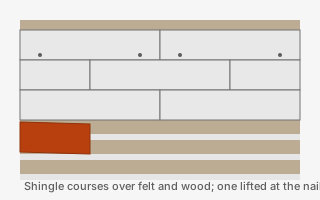
Cement asbestos siding is a rigid board made of Portland cement and asbestos fiber. On houses around Vancouver it shows up three ways: 12 by 24 inch shingles with a straight or wavy bottom edge and a wood grain pressed into the face, flat sheet on porches, carports and gable ends, and corrugated panels on shop and barn roofs. It rings when you tap it, chips with a chalky white edge, and almost never rots.
The age of the house is the first clue. It was a mainstream product from the late 1930s until manufacturers dropped asbestos in the early 1970s, so a 1948 house in Fruit Valley, a 1958 rambler in Hazel Dell, or a 1930s house in Hough that was resided after the war are all likely candidates. A house built after about 1985 with a similar looking board is almost always modern fiber cement with no asbestos in it.
The only sure answer is a lab sample. A piece the size of a quarter, wetted and bagged, goes to an accredited lab for $40 to $90 and comes back in a few days. We take the sample for you, or you can read how to take one on our testing page.
What asbestos siding removal costs in Clark County
These are the ranges we quote from. Each one includes the lab confirmed removal, wetting and bagging, the Southwest Clean Air Agency notice fee for that size, the landfill, and the waste record. The full cost guide explains every driver and the fee tiers.
| Job | Typical range | What moves the price |
|---|---|---|
| Single story ranch, 1,000 to 1,500 sq ft of siding | $6,500 to $12,000 | Pieces intact or broken, how many windows and corners, whether the old wood under it stays |
| Two story house, 1,800 to 2,500 sq ft of siding | $14,000 to $26,000 | Scaffold or lift time, steep or tight lots, second layer of siding under the cement board |
| One wall, addition tie-in, or window cut-ins (under 160 sq ft) | $1,200 to $2,800 | Our minimum covers notice, setup and disposal; the wall count matters less than the trip |
| Garage, shed or outbuilding, 300 to 700 sq ft | $2,500 to $6,000 | Roof panels on the same building, access for the trailer |
| Duplex or small multifamily, 3,000 to 5,000 sq ft | $24,000 to $50,000 | Occupied units need staged work days; the SWCAA fee steps up at 5,000 sq ft |
| Lab sample, per piece tested | $40 to $90 | Two or three samples cover most houses; rush results cost more |
From the first call to a bare wall
- 1
Address, photos, and a written range the same day
Send the address and two or three photos of the siding. We measure from the record and the pictures and send a written range from the table above, usually within hours.
- 2
Lab sample, two to five days
If you do not already have a result, we take a quarter sized piece, wet and bagged, to an accredited lab. If it comes back clean you owe the sample fee and nothing else.
- 3
SWCAA notice filed, 10 day clock starts
We file the removal notice with the Southwest Clean Air Agency for the measured square footage and pay the fee. The agency requires 10 days between filing and the first piece coming off.
- 4
Setup: plastic, water, and a wet wall
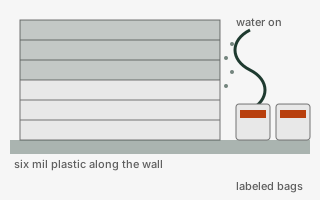
Six mil plastic along the base of every wall, a hose and a pump sprayer at the work face, and the first elevation wetted down before a nail moves. Crew in respirators and disposable suits.
- 5
Removal, nail by nail, whole and wet
Each shingle is lifted at the nails and set on the plastic. Nothing is cut, snapped, sanded or dropped. Pieces go into labeled asbestos waste bags or wrapped bundles as they come off.
- 6
Landfill run and the paperwork
The bags ride on our trailer to a landfill on the SWCAA approved list and get logged on a waste shipment record. You get a copy, along with the lab result and the notice, for your records and the next buyer.
The environmental rules: the SWCAA notice, the 10 day wait, and who may do the work
The Southwest Clean Air Agency regulates asbestos removal in Clark, Cowlitz, Lewis, Skamania, and Wahkiakum counties. Its fee table sets the notice at $153 for 48 to 159 square feet, $384 for 160 to 4,999 square feet, and $765 at 5,000 and up, each with a 10 day wait. An owner who lives in a single family house may do the removal personally for a $39 notice with no wait.
The state side is Washington Labor and Industries. Only a certified asbestos abatement contractor may remove the material for pay, and a good faith asbestos survey has to be on file before any renovation that could disturb it, with fines that can reach $600 a day for skipping it. A siding contractor, a handyman, or a demolition crew is not allowed to touch it, however licensed and professional they are for their own trade. The regulations exist for worker safety as much as for the neighbors, and we follow them on every job.
Which rule applies to you
- You own the single family house and live in it, before and after the work. You may remove it yourself under a $39 notice with no wait, or hire us.
- Anything else. A rental, a duplex, a flip, a house under contract, a multifamily or commercial building: a certified contractor is required, with the full notice fee and the 10 day wait. No exceptions for the owner doing it personally.
We wrote the whole thing up, including what the agency inspects and what happens if a neighbor calls, on the SWCAA notice page.
Houses built before 1980, and the people who own them
- Homeowners residing. New fiber cement or cedar goes on right only after the cement board comes off. We finish the day before your siding crew starts.
- Buyers and sellers. The inspector flagged it and the deal needs a number. We quote from the address so the negotiation has a real figure.
- Flippers, landlords and property managers. You cannot legally do it yourself on a rental or a flip. We run the notice and the crew so the project stays on schedule. See the contractor page.
- Siding and remodel contractors. Sub the removal to us, keep your crew off the asbestos, and get the manifest for your file.
See your range before you call
Three questions, priced from the same table on our cost guide. No email wall. The range updates as you answer and includes the SWCAA notice fee and disposal.
The number most quotes leave out is the Southwest Clean Air Agency notice: $384 at this size, filed before work starts, with a 10 day wait. Because you live in the house, the law also lets you pull it yourself for a $39 notice. We include the fee and the filing in the range above.
Service area, ranked by where the old siding is
We list the areas with the most pre-1980 housing first, because that is where cement asbestos siding actually is. A new subdivision ten minutes away has none of it; a 1950s grid forty minutes up the freeway is full of it.
- Central VancouverOldest housing in Clark County
- Fruit Valley and Bagley DownsWartime and immediate postwar housing
- Hazel DellUnincorporated Clark County postwar suburb along Highway 99
- Orchards and MinnehahaThe older cores along Fourth Plain and Covington Road are 1950s to early 1970s ranches sitting among newer subdivisions; the median year built reads 1997 only because the surrounding tracts are new
- CamasMill town core
- WashougalMill housing near the Pendleton woolen mill and the river
- LongviewPlanned mill city laid out in 1923 with a median year built of 1966
- KelsoOldest median year built on our list (1959)
- WoodlandOld downtown west of the freeway along the Lewis River is 1940s to 60s housing with cement shingle; the 2001 median comes from the newer east side and does not describe the old town
- RidgefieldLowest fit on the list and included for its historic core only
Questions people ask before they call
- How much does asbestos siding removal cost in Vancouver, WA?
- Most single story houses cost $6,500 to $12,000 and most two story houses $14,000 to $26,000, which works out to $6 to $12 per square foot of siding including the Southwest Clean Air Agency notice fee and landfill disposal. One wall or a small patch starts at $1,200. The cost guide lists every range and what moves it.
- Do I have to hire a certified contractor, or can I remove it myself?
- If you own the house and live in it before and after the work, Washington lets you remove it yourself under a $39 SWCAA notice. Any rental, flip, house under contract, multifamily or commercial building must use a Washington L&I certified asbestos abatement contractor. Nobody else, including a siding contractor, may do it for pay.
- How long does the whole thing take?
- Two to three weeks from the first call. A lab result comes back in two to five days, the SWCAA notice then carries a 10 day wait, and the removal itself takes one to three working days depending on the house.
- Is transite siding dangerous if I leave it alone?
- Intact cement asbestos siding that is not cut, sanded, drilled or broken does not release fibers, and both the EPA and the Southwest Clean Air Agency say leaving it alone is a legitimate choice. The risk is in disturbance, which is why removal is regulated and why we do it wet and whole.
- What happens to the siding after you take it down?
- Every piece goes into labeled asbestos waste bags or wrapped bundles, rides on our trailer to a landfill on the SWCAA approved disposal list, and is logged on a waste shipment record. You get a copy for your file and for the next buyer.
- Can you work with my siding contractor?
- Yes, and most of our jobs run that way. We finish the removal, sweep the wall, pull the ground plastic, and the siding crew starts the next morning with the manifest already in their inbox.
Get a written price for your house
Address and a photo or two is enough. You get a range the same day, the exact number after we measure, and the lab, the notice, and the landfill all on one invoice that matches the quote.
Prefer to talk? (360) 838-1233. Photos, lab reports, and contracts can go to hello@burntbridgesidingremoval.com.